












Oklahoma Dangerous Products Attorneys
When the things you trusted cause real harm.
Oklahoma law gives consumers a powerful tool against manufacturers — when the case is built right. The first conversation is private, free, and on your terms.
You used it the way it was meant to be used. It still hurt you.
You bought it from a store, ordered it from a website, or were given it for a job. You used it the way it was meant to be used. And it hurt you, or it hurt someone you love. Defective and dangerous products send roughly twelve million Americans to emergency rooms every year — from auto parts and household appliances to medications and medical devices, children’s products, and industrial equipment.
What most people do not know is that Oklahoma law gives consumers a strong hand in these cases. Under Oklahoma’s strict liability rule, you do not have to prove the manufacturer was careless or negligent. You only have to prove that the product was defective, that the defect was present when it left the manufacturer’s hands, and that the defect caused your injury.
That is a meaningful advantage — but only if the case is investigated, preserved, and built correctly from day one.
Oklahoma recognizes four distinct theories of product liability — and most strong cases involve more than one.
Identifying the right legal theory — or theories — is the first step in any product liability case. Oklahoma courts have long recognized the categories below, and an experienced attorney will evaluate which apply to your specific situation.
Design Defects
The product’s intended design itself is unreasonably dangerous — every unit produced carries the same risk. Top-heavy SUVs prone to rollover, drop-side cribs, and ignition systems that fail in foreseeable conditions are classic examples.
Manufacturing Defects
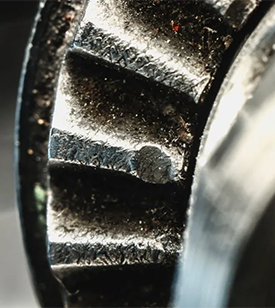
The design is sound, but something went wrong during production — contaminated material, an assembly error, a faulty component, a flawed batch. The injured product deviates from its own design specifications.
Failure to Warn
The product lacked clear, complete warnings about known risks, or its instructions were inadequate for safe use. Under Oklahoma law, manufacturers must disclose foreseeable hazards — even risks that affect only certain users.
Breach of Warranty
Express or implied promises about a product’s safety, performance, or fitness for ordinary use, where the product fails to deliver. Oklahoma’s Uniform Commercial Code creates additional avenues for recovery alongside strict liability and negligence.
“In product cases, the single most important piece of evidence is usually the product itself. Do not return it to the store, do not throw it away, do not let the manufacturer have it back, and do not allow anyone to alter it. Photograph everything, save the packaging, save your receipt — then call us before you talk to anyone else.”
Product liability cases often reach further than most people expect.
Two features of Oklahoma product liability law surprise many injured consumers. Liability is not limited to the manufacturer, and you do not have to be the buyer or even the user of the product to recover.
Manufacturers
The companies that designed and built the product. The primary defendant in most cases — and often the source of substantial coverage in cases against large national brands.
Component-Part Suppliers
When a single defective component — an airbag inflator, a battery cell, a brake assembly — caused the injury, its supplier may bear separate liability alongside the finished-product manufacturer.
Distributors & Retailers
Anyone in the chain of distribution who profited from putting the product into commerce — distributors, wholesalers, retailers, and commercial lessors — can share liability under Oklahoma law.
Bystanders & Family
You do not have to be the buyer or user to recover. Oklahoma extends recovery to bystanders directly involved in an incident, and in qualifying circumstances to family members who witnessed the injury.
These categories account for the majority of serious product liability cases in Oklahoma.
Some product types come up in our office over and over. If your situation involves one of these — or any other product whose use led to a serious injury — it is worth a phone call.
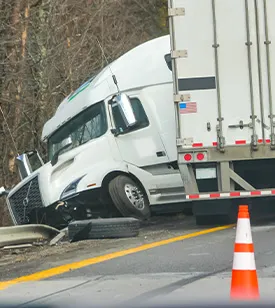
Vehicles & Auto Parts
Defective tires, airbags, seatbelts, brakes, fuel systems, and ignition switches. Auto component cases often involve large national manufacturers and substantial coverage.
Children’s Products & Toys
Choking hazards, lead in paint or materials, defective car seats, dangerous cribs and bunk beds, and toys that fail under foreseeable use. Oklahoma allows enhanced damages where conduct endangered children.
Medical Devices & Pharmaceuticals
Defective hip and knee implants, surgical mesh, blood thinners, and drugs whose risks were understated or concealed by the manufacturer. These cases often proceed alongside larger multidistrict litigation.
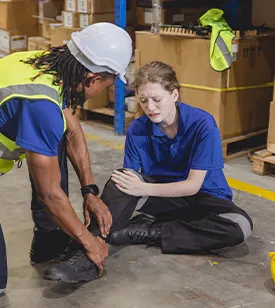
Industrial & Oilfield Equipment
Defective machinery, pressure equipment, cranes, hand tools, and PPE. Workplace injuries from defective equipment can support both workers’ compensation and a separate product liability claim against the manufacturer.
Household Appliances & Electronics
Lithium-ion battery fires, exploding pressure cookers, defective heating equipment, and electrical products that ignite or short-circuit under normal use.
Firearms & Outdoor Products
Guns that misfire when the safety is engaged, defective ammunition, ATVs and recreational vehicles prone to rollover, and defective camping and outdoor equipment.
Your first decisions can decide the case.
There is no checklist that injured consumers are required to follow. These steps are offered as a guide for what protects a possible claim — most of them are about evidence that disappears quickly.
Get medical care first.
Your health and safety come before anything else. Tell the providers exactly what product was involved and how the injury happened — those records will matter later.
Save the product.
Do not return it to the store, do not throw it away, do not let the manufacturer have it back, and do not allow anyone to alter it. The product itself is usually the most important piece of evidence.
Save the packaging and receipt.
The box, the inserts, the warning labels, the user manual, and any proof of purchase. Manufacturers and retailers track lot numbers and recalls through this paperwork.
Photograph everything.
Photograph the product from every angle, the scene of the injury, and the injuries themselves over time. Save any error messages, app screens, or model-and-serial-number plates.
Do not give a recorded statement.
If a manufacturer, insurer, or retailer calls and asks for a statement or asks you to ship the product back for inspection, decline politely and call us first. A free consultation costs you nothing.
“Where conduct shows reckless disregard for public safety — a manufacturer that ignored its own engineers, hid known defects, or rushed a product to market — Oklahoma law also permits punitive damages on top of compensatory recovery.”
The clock starts running the day you are hurt — and physical evidence runs out faster.
Oklahoma’s statute of limitations gives you two years from the date of the injury to file most product liability claims. The discovery rule may extend that period when an injury or its connection to a defective product becomes known later — for example, in cases involving toxic exposure or a latent defect. Beyond the statute, the practical deadlines are shorter: physical evidence can be lost, recalled, or returned, and the manufacturer’s records become harder to obtain over time. If you think you may have a case, the answer is to call, not to wait.
The experts, the resources, and the willingness to go to verdict.
Product liability cases require engineering, medical, and industry experts working alongside trial-ready counsel. We have the experience and resources to build cases against national manufacturers — and the willingness to take them to verdict when settlement offers fall short.
-
Evidence preserved from day oneWe secure the product, the packaging, the records, and the chain of custody before anything walks. In product cases, what you save in the first week often decides what you can prove at trial.
-
Engineering and medical experts on callWe work with engineers, biomechanics specialists, treating physicians, and industry veterans who can show what the defect was, what the manufacturer knew, and what should have been done differently.
-
Every liable party identifiedManufacturer, component supplier, distributor, retailer, commercial lessor — Oklahoma law lets you reach the entire chain of distribution. We map every applicable policy before settlement talks begin.
-
No fee unless we recoverContingency representation. The free consultation costs you nothing, and you pay nothing unless we recover compensation for you.
A recent result that reflects what these cases can achieve.
Past results do not guarantee future outcomes — every case is decided on its own facts. They do demonstrate what is possible when the right evidence is preserved and the right experts are engaged.
Save the product. Save the packaging. Then call us.
Injured by a defective product? The first conversation costs you nothing.
Tell us what happened. We will review the situation, explain your options in plain language, and tell you whether there is a case to pursue. There is no fee to talk to us, and no fee unless we recover for you.
Request a Free Case Review
All consultations are confidential. Response within one business day.